Yo-Yo Ma: A Prodigy for the World
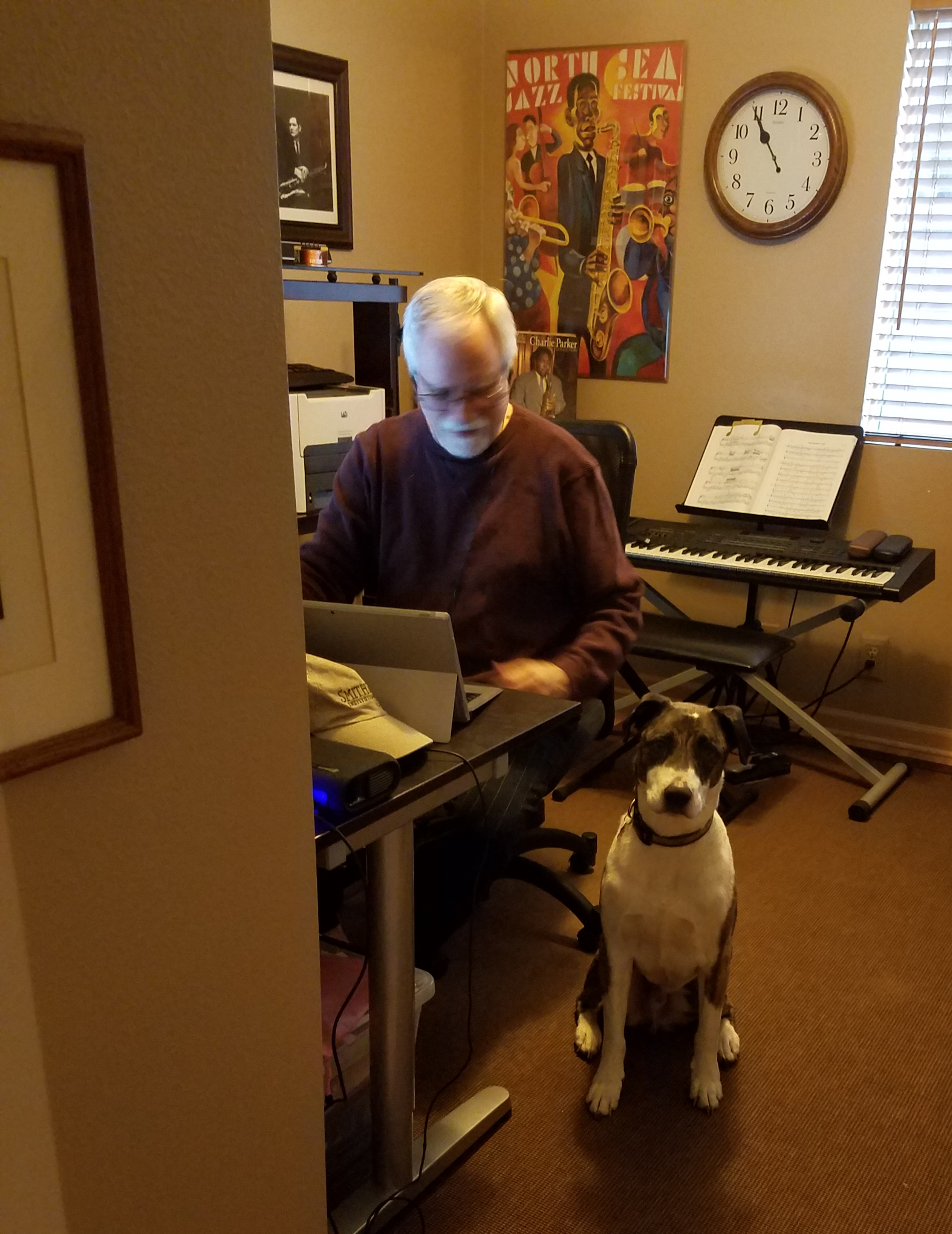
The assignment: Describe a celebrity that has impacted you. Clearly, my husband would write about a musician but which one? The answer surprised me: Yo-Yo Ma. Here is his essay:
Imagine being a musical prodigy at four and performing at Carnegie Hall by nine. Where do you go from there? Would you be content with continued notoriety as you grew older, or would you feel that your accomplishments did not matter or make a difference in the world? These are the questions that Yo-Yo Ma, the child prodigy, faced as an adult. Yo-Yo Ma started playing the cello at age four, performed publicly at five, and played at Carnegie Hall at nine. This is quite an achievement for a nine-year-old. I have never been a prodigy, nor have I experienced the pressure of living up to that title or its expectations. I cannot describe what that would feel like, but I assume it leaves little room for childhood. The discipline needed to reach and sustain virtuosity in such a highly scrutinized and demanding field could be overwhelming for a growing child. Yo-Yo Ma, however, transformed into one of the world’s most celebrated cellists. Yo-Yo Ma’s joyful, compassionate, and intimate cello performances have inspired me, as a jazz musician, to embrace classical music as one of my favorite genres, making him the first classical artist to have that impact on me. His immense worldwide popularity is based not only on his musical virtuosity but also on his desire and commitment to use his music to connect and communicate with people from different musical genres and diverse world cultures.
Yo-Yo Ma broadened my musical horizons, inspiring me to include classical music among my favorite genres. I first saw Yo-Yo Ma on TV performing during the opening ceremony of the 2002 Winter Olympics in Salt Lake City, Utah. He performed with Sting on his performance of Fragile. It was a beautiful performance. I had been following Sting’s work for years and watched his live-streaming concert of Fragile in Tuscany, Italy, on 9/11/2001. The song Fragile was performed as a prayer and a gesture of respect for those who had died or were suffering because of the tragedy that occurred that morning. That song deeply moved me, and seeing Yo-Yo Ma perform it with Sting made me want to learn more about the amazing cellist.
Learning more about Yo-Yo Ma deepened my respect and admiration for him, not just as a musician but also as a person. When he was nineteen, Yo-Yo Ma was diagnosed with severe scoliosis. He underwent a high-risk spinal surgery that required a six-month recovery, during which he couldn't play the cello. He recovered, but as an adult he began questioning who he was and what his purpose was. He still loved playing music, but he wanted his music to make a difference and contribute to humanity. These periods were times of reflection, inspiring him to use his music to connect and communicate with people around the world, regardless of their differences. These were inspiring qualities that touched me. According to The Cello Museum, “Ma is a man who makes connections – connections between genres, connections between cultures, connections between past and future, and ultimately, connections between people". I have seen those connections. I saw him ride through the streets of New York, playing the cello, in hopes that it would ease the pain of the COVID-19 pandemic. His spirit, personality, and compassion seem genuine, and when he performs, it looks like he is communicating with a higher power. I quickly recognized how popular he had become. His concerts and recordings are well documented and easily accessible on YouTube.
Yo-Yo Ma is considered one of the most popular classical musicians and is also widely recognized across all musical genres. According to Arts Journal, Yo-Yo Ma has been described as “the most popular classical musician in the world,” based on sales figures. I have attended many concerts with my wife where he performed as a soloist with an orchestra or alongside other greats, including pianists Emanuel Ax and Lang Lang and violinists Itzhak Perlman and Joshua Bell. One of our favorite movies is “Crouching Tiger, Hidden Dragon.” The score for that film was specifically composed by Tan Dun for Yo-Yo Ma. Every time I hear the score, it reminds me of how much I love the movie and how deeply the score moves me. He has performed cello pieces written by John Williams, Osvaldo Golijov, and many others. It’s clear that he is in high demand and recognized as a world-famous cellist. Yo-Yo Ma leveraged his worldwide fame and influence to redefine classical music and use it as a powerful means of uniting people across diverse musical genres. He began crossing traditional classical boundaries to explore other genres, including Appalachian Bluegrass, Argentine Tango, Brazilian Bossa Nova, jazz, traditional Chinese music, and Persian melodies. According to Encyclopedia Britannica, “In addition to his conventional repertoire, Ma also recorded with improvisational singer Bobby McFerrin on Hush (1992) and with bluegrass musicians on Appalachia Waltz (1996) and Appalachian Journey (2000). On Soul of the Tango (1997), he recorded the tangos of Astor Piazzolla.” These playing and recording sessions were a great success and proof that skilled musicians can communicate through the universal language of music, which requires focused listening to others and the skill and patience to know when and how to contribute to the conversation. Many of those performances were made into documentaries and I watched each of them. In each documentary, Yo-Yo Ma was humble and even a little nervous about whether he could adapt to a genre with radically different styles and techniques from his classical training. Yet, as soon as they started playing, we saw Yo-Yo Ma become a perfect addition to the song. He was listening carefully. He was communicating. They were sharing the universal language of music. I’ve experienced this phenomenon while playing and improvising with other jazz musicians. I had not seen that occur in other more structured genres until I witnessed Yo-Yo Ma communicate with musicians from such a variety of genres, backgrounds and cultures.
Through his Silk Road Project, Yo-Yo Ma helped redefine classical music as a global, collaborative art form rather than confining it to Western traditions. Yo-Yo Ma founded the Silk Road Project in 1998 to explore the cultural traditions along the ancient Silk Road. This is supported by Britannica: “In 1998, Ma founded the Silk Road Project, an arts organization that initially focused on exploring the cultural traditions along the Silk Road, an ancient trading route that linked China with the West.” We were lucky to see their concert at the Hollywood Bowl. It was incredible watching people from many different cultures communicate through the universal language of music. It felt peaceful and powerful at the same time. The project later broadened its scope, using the Silk Road as a metaphor for uniting artistic endeavors across the world and between different cultures. He also established the Silk Road Ensemble as part of the initiative. The original members of the Silk Road Ensemble included: Yo-Yo Ma – cellist, Kinan Azmeh – Syrian clarinetist, Wu Man – Chinese pipa player, Christina Pato – Galician bagpiper (known as the “Jimi Hendrix of the gaita”), and Kayhan Kalhor – Iranian kamancheh master. The Silk Road Ensemble is still performing, touring, and evolving, although it has changed to a flexible collective of rotating musicians rather than the fixed members of the original group. Yo-Yo Ma has stepped down as its artistic director, and the ensemble now incorporates global musical traditions as well as contemporary influences like American roots music. Together, the Silk Road Project and its evolving ensemble demonstrate how Yo-Yo Ma transformed classical music into a vibrant, worldwide collaboration that honors cultural exchange and shared creativity.
Yo-Yo Ma has influenced my experience of, appreciation for, and purpose in music in my life. From first seeing him perform with Sting at the 2002 Winter Olympics to attending his concerts and exploring his recordings, I realized that his joyful presence, emotional depth, and compassion opened my ears to classical music as a powerful, expressive force. As I learned more about his life, I saw how he went beyond technical brilliance and personal success to connect audiences, cultures, and traditions, working across genres and founding the Silk Road Project. By uniting musicians worldwide, he helped reimagine classical music as a global, collaborative art form that honors diversity and human connection.
Through Yo-Yo Ma, I not only discovered and learned to love classical music, but I also came to see music itself as a powerful, meaningful form of expression. As his fame grew, he introduced me to a new kind of classical musician—someone who crosses traditional genre boundaries and uses projects like the Silk Road Project to expand classical music into a diverse, global conversation among cultures. For me, Yo-Yo Ma is more than a virtuoso cellist; he is a prodigy for the world and a model of the person I strive to become. I want to emulate his desire to use music to connect with the students I coach. His influence has been profound.
Encyclopedia Britannica. “Biography.” Yo-Yo Ma, American Cellist, Encyclopedia B,
27 Mar. 2026, www.yo-yoma.com/biography/.
McLennan, Greg. “Yo-Yo Ma: How to Be Everything to Everyone.” Arts Journal,
22 June 2003, https://www.artsjournal.org/2003/06/22/yo-yo-ma-how-to-be-everything-to-everyone/.
Neece, Brenda. “Yo‑Yo Ma – Making Connections.” The Cello Museum,
30 Oct. 2020, https://cellomuseum.org/yo-yo-ma-making-connections/.
Olympics. Salt Lake City 2002 Opening Ceremony | Salt Lake City 2002 Replays. YouTube, 25
May 2020, https://www.youtube.com/watch?v=ui3vlvpG6Ec.
Wloszczyna, Susan. “The Music of Strangers: Yo-Yo Ma and the Silk Road Ensemble Movie Review (2016) | Roger Ebert.” Roger Ebert, 10 June 2016, www.rogerebert.com/reviews/the-music-of-strangers-2016.


Comments