Don't Kill the Sax Player
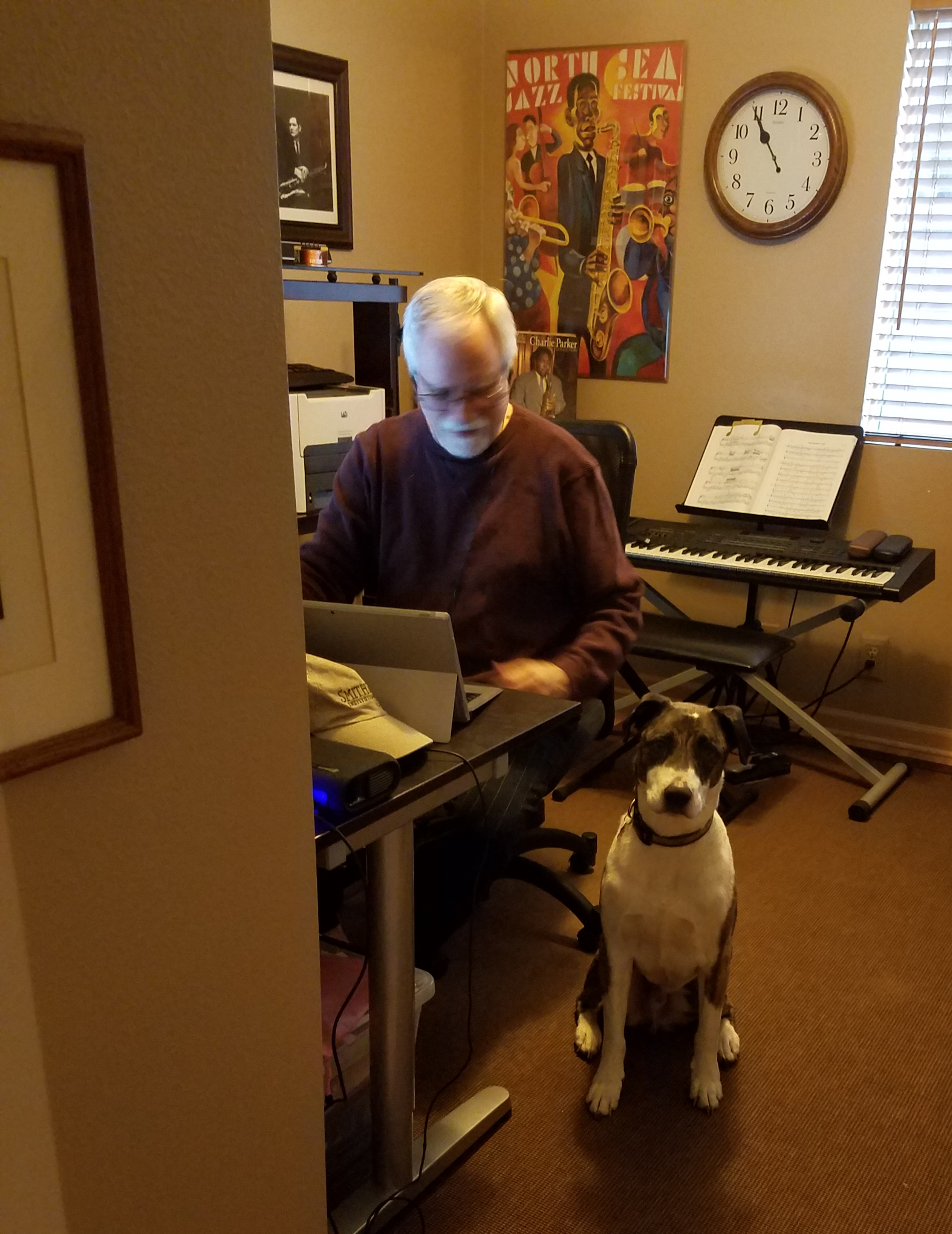
He was a 25-year-old saxophone player living an enchanted life in Hawaii, in the days when people came to clubs to listen to music. He was a talented player who could improvise at the highest level. He was known as Bebop, reflecting his influence from the legendary Charlie Bird Parker, the pioneer of the Bebop era - at least that’s what he told himself. He was flying high on cloud nine when, seemingly out
of nowhere, a DJ with disco tracks and a large following of heavy-drinking disco dancers appeared on the scene. The club owner really liked the new vibe and the significant increase in revenue. His band of four was shown the door.
“Wow! What do I do now?” he pondered. The young saxophone player had appeared on the scene at the tail-end of the listening era. The new business model for club owners was to increase bar revenue without paying for a live band. This made it challenging for musicians to earn a living. Although the young player had talent, he couldn’t compete with top-shelf recording artists because, as you recall, he was legendary only in his own mind. The awards that gave him that feeling were received when he was a big fish in a small pond. Now living in Los Angeles, he was a minnow in the ocean. The only way to continue his passion was to live out of a suitcase as a traveling musician, known as “living on the road”.
Instead, he chose to dive into technology, as personal computers and the digital world were just entering the consumer mainstream. He spent 40 successful years in that industry, yet music remained his passion. If you haven’t guessed yet, the He in this story is Me. Over the past fifty years, I have sought to integrate music and technology without diminishing or bastardizing the musical art form. There are legitimate concerns about technologies such as generative AI in music composition and production. I, however, believe there is a place where music and technology can co-exist and even inspire creativity when used properly.
Although some people believe digital technology harms the music industry by eliminating real musicians and making music sound robotic, many iconic composers, musicians, and sound engineers use these tools creatively today. Digital technology has also made music production more accessible by enabling affordable home recording studios to replace expensive professional ones. In addition, these technologies connect musicians and their fans worldwide via virtual recording studios and social media, and they create opportunities to teach and perform without a band.
Some people argue that digital technology harms the music industry by eliminating real musicians, thereby making music sound artificial. They will explain that digital technologies can reduce musical creativity to Artificial Intelligence prompt writing, which eventually generates cookie-cutter songs. Others will complain that digital technology tools are eliminating job opportunities in the music industry. In the article Digital Technology and the Downfall of Music Production, Noah Martins stated, “The widespread availability of free low-cost digital music has led many to view music as a disposable commodity, rather than a valuable art form. This has undermined the economic and social value of music, leading to a decline in revenues for artists, record labels, and other music industry stakeholders.” Noah further explains, “… the rise of digital music has also contributed to the decline of physical music formats, such as CDs and vinyl records, which were once highly prized and collected by music enthusiasts.” It is true that digital technologies can harm certain aspects of the music industry, but if used properly and for the right reasons, they can expand creativity, broaden community reach, and increase revenue for creators, composers, musicians, and sound engineers.
Digital technologies have been used by many of the music industry's iconic members. Steely Dan, Stevie Wonder, Herbie Hancock, Michael Brecker, Prince, Peter Gabriel, Michael Jackson, Radiohead, and The Beatles are just a few of the performers who have used digital technologies in their work. Danny Elfman, Hans Zimmer, Vangelis, and Ludwig Goransson are among the composers who have used digital technologies in their works. In an interview with Donald Fagen and Walter Becker, known as Steely Dan, Donald stated, “Yeah, I think Pro Tools, for instance, that digital technology is really helpful at times, just because you can maneuver around easily and quickly.” The interview further mentions, “As documented in the liner notes for the 2000 reissue of Gaucho, Steely Dan’s chiefs recalled, 'Roger Nichols had this toy - we thought of it as a toy - but one day he came to work and told us that the toy had become a man - one helluva man, in fact. A very talented man. A steady man. A man for all seasons - call him Wendel.” Pro Tools is the digital audio workstation (DAW) that Roger Nichols, a legendary audio engineer, used to help create Steely Dan’s signature sound. A sound that has continued to reverberate and inspire over the decades. Hans Zimmer, a prolific composer, is known for blending electronic music with traditional orchestral arrangements in over 150 films. A few of his iconic scores include Dune, Inception, The Lion King, The Dark Knight Trilogy, Interstellar, and more. Depending on the project, Hans has been known to use Pro Tools alongside Cubase and Logic Pro to score his films. I use Cubase in my work.
In the music and recording industry, the term “digital technology” can refer to a number of subjects. For example, a composer can use a DAW to sketch a composition or arrangement, using virtual instruments (VSTs) for playback. Virtual Instruments are digital samples of instruments recorded live. There are libraries of every type of instrument you can imagine. Loops are another digital form used in music: pre-recorded grooves or sounds that can add character. The roar of dinosaurs in Jurassic Park is thankfully a digitally crafted sound, and without it, the audience's experience would be significantly different. The Digital Audio Workstation (DAW) should have its own dedicated essay on the benefits it provides. It's basically an entire recording studio that can run on a PC or MAC laptop. It is completely portable and a mere fraction of the cost of renting a professional recording studio. The DAW allows the composer/artist to record audio files and import or enter MIDI (Musical Instrument Digital Interface) data, which can be assigned to a VST (Virtual Studio Technology) instrument to play. You can edit any aspect of the music, such as key and time signatures, instrumentation, and harmonies, as well as test out different arrangement structures like Intro, Verse, Chorus, Bridge, and Outro combinations without affecting the original arrangement. The mixing and mastering phases of production are also supported. In the article Analog Isn’t Always Better – the Big Benefits of Digital, the author writes, “Digital software allows producers to be almost infinitely precise when it comes to setting parameters. Whereas dials on analog gear generally allow producers to set parameters to ballpark figures, digital software allows precise tweaking … precision is always advantageous, and digital is unmatched in that field.” Given the advantages of digital technology in the music industry, it's understandable why music production has grown substantially. It’s faster, cheaper, more collaborative, and accessible. Musicians no longer need a recording contract with a major record label, which will dictate when and how their songs are recorded and marketed, and then take a chunk of the profits. Musicians like Macklemore, Chance the Rapper, Billie Eilish, Prince, and many more bypassed major record labels by independently producing, distributing, and marketing their own music. They build their audience through streaming and social media.
Music notation, sometimes called engraving, for a score's publication so orchestras have something to read when performing it, is a tedious and sometimes sloppy job when done by hand. I’ve experienced this both as an engraver and as a musician. The required calligraphy-like skills are well beyond my abilities, and sloppy sheet music is difficult to read. Again, digital technologies such as Sibelius, Dorico, and Finale saved the day, significantly reducing engraving stress and workload while increasing productivity. In the article Working With Orchestrators & Arrangers, Tom Flint writes, “When presented with a basic score from DAWs such as Logic or Cubase, an arranger might make manual annotations, and have someone turn their scrawls into a tidy score using a dedicated application such as Avid’s Sibelius.” I have had situations where the sheet music given to a vocalist was in a key outside of the vocalist’s range. If that score was engraved using Sibelius, I can change the entire score to fit the vocalist’s range in a matter of minutes.
Digital technology and the internet have provided a platform for musicians to collaborate. In an era where remote collaboration has become the norm, musicians and producers are no longer bound by geography. Steinberg’s VST Connect is one of the most powerful tools enabling this shift, allowing artists to record, produce, and collaborate with others anywhere in the world — all in real time. I have used this tool in collaboration with a fellow musician. I was in California while the other musician was in Delaware. We were able to record together in real time, as if we were standing next to each other. There was no latency in what we each heard. A MusicTech article quotes, “Don’t let social distancing curtail your collaborations. With VST Connect, you can work with musicians anywhere in the world and still record directly into your Cubase project.”
Streaming and social media, both forms of digital technology, have enabled musicians and their fans to connect. That connection forms the foundation of their marketing strategies and successes. In a Sage Journals article, the author Amanda Krause states, “Social media, including SNS, increases the potential for musician–fan interactions, providing more opportunities for fans to engage with musicians … and the music industry has been quick to seize the marketing potential of this. Some musicians, perceived as inaccessible previously, are now interacting directly with fans online, sharing their lives in a more unfiltered manner.” Spotify, Apple Music, Amazon Music, YouTube Music, and Pandora are some of the streaming services that support the musician/fan connection.
The digital technologies that mean the most to me are those I use to teach my music students. I’ve been teaching music to students of all ages for over ten years. Some of my students have gone on to surpass anything I’ve achieved in my professional musical career. This is due to the capabilities that digital technology has provided me. I’m currently employed as a woodwind coach (saxophone, flute, and clarinet) at a local high school and two feeder middle schools. When the students receive new music from the band director, I enter it into Sibelius and render MP3 files for them to play along with when practicing at home. I use Dropbox to publish those files so they can easily view and download them on their computer, tablet, or phone. I teach them music theory and improvisation techniques using a program called Band In a Box, which allows users to enter chord progressions, select a style, and generate a backing track for a song. Individually, the students identify a song they would like to learn. I plug that into Band In a Box to generate a backing track for them, then upload it to a Dropbox folder I create for them. They can use these tracks to experiment with improvisation techniques and ideas. A Sound on Sound article identifies the benefits of Band In A Box, saying, “ Band In A Box is an intelligent automatic accompaniment program... and a powerful and creative music composition tool for exploring and developing musical ideas with near-instantaneous feedback. Unlike my venerable Casio CT6000, which played accompaniments in real time as chords were formed with the left hand, BIAB is an ‘offline’ composer and arranger that can complete an arrangement in seconds, then play it with a ‘band’ of up to seven musicians who live in your computer.” I sometimes use Zoom to connect with my students, as an article notes: “Zoom has been one of the most popular platforms for online teaching, and many musicians continue to use it to reach students beyond their local area.” All of these technologies help me to be a better woodwind coach and musician.
Many people think digital technology hurts the music industry because it can replace real musicians and make music sound mechanical. However, lots of famous composers, musicians, and sound engineers are using these tools in really creative ways today. Digital tech has also opened new possibilities by making it easier and more affordable for anyone to set up a home recording studio, rather than relying on costly professional studios. Plus, these innovations help musicians connect with their fans worldwide through virtual studios and social media. They also provide wonderful opportunities for teaching and performing even without a full band.
I support the use of digital technology in music production, teaching, and enjoyment. I will, however, add some caveats. The use of generative AI across any form of media requires regulations in place before I can support the use of those tools for profit. Generative AI uses data from large collections of previous works. Who gets compensated -- the original artist the data was collected from, or the person writing the AI prompts to generate the work? Those are serious questions that need to be properly and legally addressed. (I should note that Band In a Box pays professional musicians to record samples of them playing their instruments for use in generating backing tracks.) The original performer should always be compensated for their work. I am okay with using generative AI for study purposes and to spark your own creativity. A digital tool is only as good as the user’s knowledge of its capabilities. Using digital tools to fine-tune the recording during the mixing and mastering phases of production will reduce the “it sounds robotic” complaints.
By the way, live music isn’t always better. An analog musician who struggles to play in tune or who sounds robotic will also need to practice to improve his craft. All instruments, whether analog or digital, require the user's focused time and effort to sound good. They are all instruments and tools that can help the musician stay relevant and employed. In my case, digital technologies didn’t kill the sax player. They revived him.


Comments