Lost in Translation: A Personal View of Code-Switching to Communicate
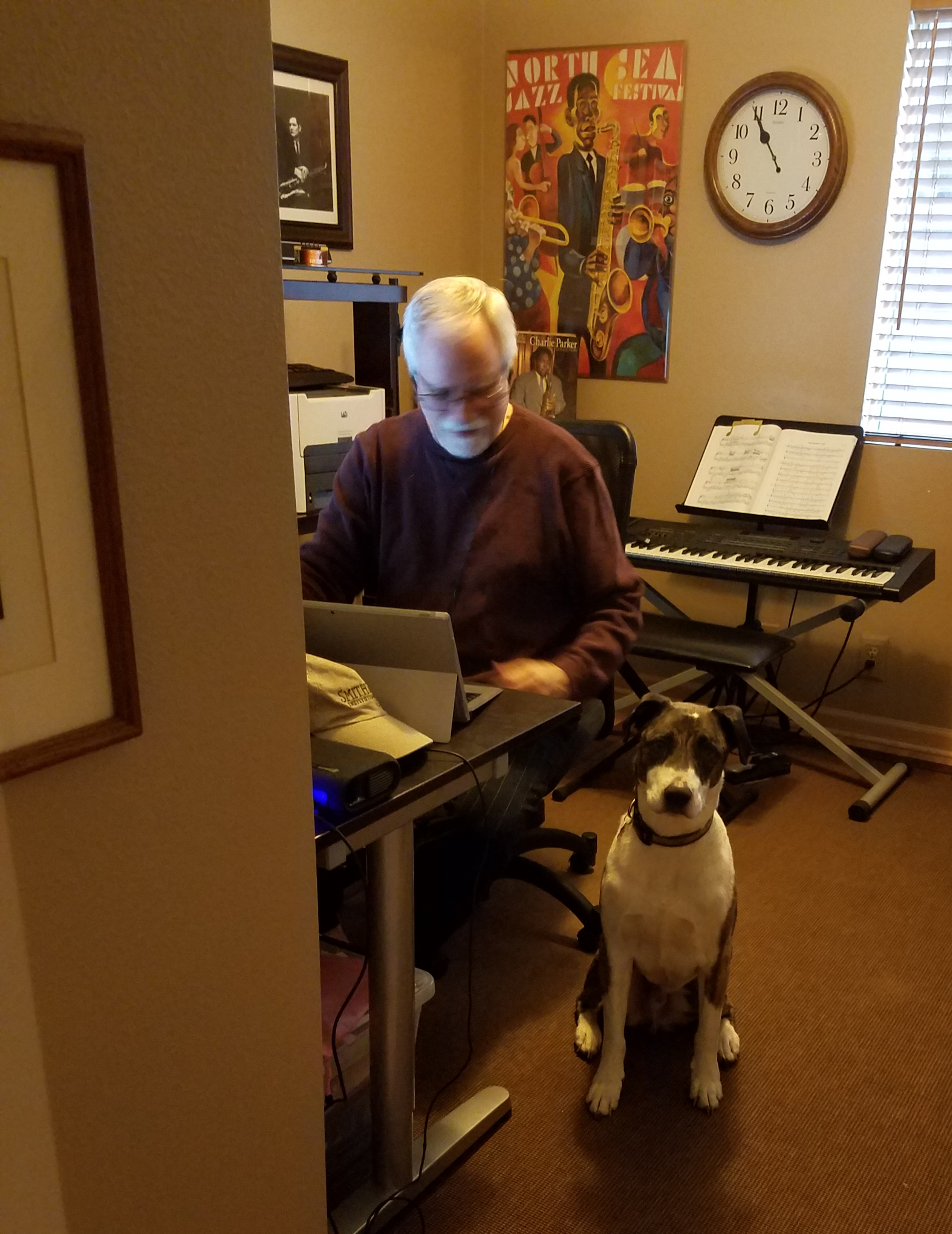
Recently, my husband wrote an essay that explains his experience in communicating with his family, friends and associates. It is clear that he's an expert in personalizing a subject that could have been mundane -- that of "Code-Switching".
“Look, you’re really cute, but I don’t know what you’re saying.”, Marlin says to Squirt in Disney’s Finding Nemo. Squirt had just rattled off some surfer lingo: “Okay, first crank a hard cutback as you hit the wall. There’s a screaming bottom curve, so watch out. Remember: rip it, roll it, and punch it.” Confused, Marlin replies, “I think he’s trying to speak to me.” This scene shows what happens when two people try to communicate but are speaking different languages -- in this case, slang or a speech style that is not shared by both parties.
I’ve found myself in a similar situation before. I used to teach at a local music store and I remember one time trying to explain music theory and improvisation to a student who clearly wasn’t ready for it. I thought I was being pretty cool, sharing all this advanced knowledge but then I saw the blank, overwhelmed look on his face -- like a deer in the headlights. The content was solid but it completely went over his head.
That moment stuck with me because it reminded me that communication is not just about what you know. It is about meeting people where they are. Whether you're teaching, having a conversation, or just navigating daily life, real communication depends on your ability to connect with where the other person is -- what they are ready for, what they know, and what they need. Without that connection, even the most well-intended ideas can fall flat or be completely misunderstood. Thomas and McDonagh* write in The Australasian Medical Journal,
“The ability to communicate with others and express ourselves is a basic human need. As we develop our understanding of the world, based on our upbringing, education, and so on, our perspective and the way we communicate can differ from those around us. Engaging and interacting with others is a critical part of healthy living. It is the responsibility of the individual to ensure that they are understood in the way they intended.”
In the scenario with my young music student, I was focusing more on myself and my musical identity rather than on the needs of my student. Luckily, I was able to recognize the problem and alter, or code-switch, to a language style more in line with my student. This essay explores how I shift language styles depending on who I'm with and where I am in life. From the slang and profanity-filled lingo I might use with fellow musicians, peer colleagues, and some family and friends to the polished professionalism required in my career, and to a more restrained style I use with relationships that are offended by profanity. Each relationship draws out a different version of my voice which together reflects the full spectrum of who I am.
As a musician, I often adapt my language style depending on the genre, background, and shared experiences of the musicians I am communicating with. The types of musicians or bands that I have been associated with include: Top Forty, Funk, Blues, Jazz, Classical, and Christian. All of the bands, outside of Classical and Christian, share a similar language style that would include slang, lingo, and the freedom to use profanity. For instance, when playing with funk, blues, or jazz musicians, I tend to use the slang and lingo commonly associated with that scene -- terms like those defined by Gary Motley**: “ 'Changes' - The chords to a tune; 'In The Pocket' - When the music is rhythmically in a groove; 'Gig' - A musical job, be it a club, party, festival or recording date; 'Riff' - Repeated horn figure, often played behind a solo; 'Lick' - An improvised phrase that has entered the everyday language of jazz, frequently used descriptively, as in ‘a Joe Henderson lick’.” Conversations I would have amongst these types of musicians could very well include profanity such as: "fuckin’ A" and "shit-faced". I remember being the only white guy in an all-Black funk band -- an experience that turned out to be unforgettable -- but before I could truly fit in, I had to learn their language, including profanity, lingo, and slang. Once the band helped me get the hang of it, I felt something powerful: acceptance, camaraderie, trust, and a real sense of community. When I talk with Christian musicians, the tone naturally shifts. Profanity is off the table and the language leans heavily into spiritual expressions. I would often hear and use phrases like “born again,” meaning someone’s had a spiritual awakening, or “witnessing,” which is all about sharing faith stories. One phrase that always stood out to me was “washed in the blood" -- a vivid, poetic way to talk about being forgiven through Jesus’ sacrifice. These conversations feel deeply rooted in faith and they carry a sense of reverence. It is a sharp contrast to the way Funk musicians speak, where slang, raw emotion, and profanity were sometimes part of the rhythm of communication. Moving between these two worlds meant I had to shift gears constantly. I used code-switching not just to fit in, but to genuinely connect, finding the right tone and style depending on who I was talking to. As Jeff Rumage*** describes the term, “Code-switching is when a person changes the way they speak, behave, or present themselves in specific situations or circumstances.” I believe that I utilize code-switching in all my relationships, whether I’m interacting with family, friends, or colleagues. It’s rooted in a desire to connect more authentically, be understood, or navigate social expectations.
My language style with family and friends shifts significantly based on generational differences, cultural norms, and the nature of each relationship -- whether with blood relatives or in-laws. Each group has a different way of speaking. With my blood relatives, my tone is casual yet somewhat reserved, influenced by a Christian style of communication. The slang I use falls into what might be called “churchy language.” It is a mix of words and phrases that are pretty common in the Christian community -- terms like “Communion”, “atonement”, “salvation”, “praise the Lord”, “Hallelujah”, “Amen” and “Where’s the potluck?” Instead of swearing, I tend to use softer substitutes like “jeez,” “fudge,” “shoot,” or “heck” -- enough to get the point across without crossing the line. The vibe in these conversations is usually upbeat. We tend to stick to safe, familiar ground and no one ever raises their voice or vents their frustration. When things get tough, we are more likely to say, “Be patient.”, “The Lord knows best.”, or “Let go and let God.”
In contrast, my in-law family is much more outspoken and unfiltered. Profanity is common and they don’t hesitate to speak their minds. I still remember the first time I met them. I honestly thought they all hated each other. Slang, in these conversations, is usually tied to current events, and the profanity used is the opposite of my blood relative’s milder alternatives. They come right out and let it fly, “Jesus”, “fuck”, “shit”, and “hell”.
I try to avoid using too much profanity in conversations; though, I’ll admit, some choice words fly out if I stub my toe or hit my finger with a hammer. Now, I know why! Kristin Wong writes in her “The Case for Cursing” article,
“Swearing is beneficial beyond making your language more colorful. It can also offer catharsis. A study co-authored by Richard Stephens, a senior lecturer in psychology at Keele University, found that swearing can increase your ability to withstand pain. So, when you stub your toe and howl an expletive, it might help you tolerate the pain better."
When talking with friends, I find myself code-switching depending on who they are and what our relationship is built on. I’ll analyze a few things first: Are they more conservative or liberal? Are they faith-based or not? How long have we known each other? Even their age plays a role. This analysis helps me figure out how much I need to adjust my language -- whether I should keep things more formal, relaxed, spiritual, or just casual and open. It is not about being fake. It is about being respectful and connecting in a way that feels right for both of us.
Making real connections through conversation is just as important in my professional life as it is in my personal life. My forty-year professional career encompassed a range of relationships defined by the functions I performed, the roles I held and the people I interacted with. These included positions in systems development, project management, business analysis, administration, and executive as well as both hands-on developer and leadership roles. Each of these roles demanded a distinct language style. As a developer, I often relied on slang and technical jargon specific to the technology at hand. I had to quickly identify whether the focus was web development, programming languages, database design, or cloud development. Communication in these settings requires fluency in terms like "front-end", "back-end", "authentication", "cloud", "cookie", "encryption", "bandwidth", "bug", "browser", "cache", "Assembler", "BASIC", "object-oriented" and many more. I also used a wide range of acronyms, including SDLC, IDE, UI, UX, CRUD, MVP, POC, OOP, SaaS, HTML, XML, JSON, SQL, REST, SDK, JDK, JRE, GUI, URL, FTP, QA and many others. As a developer, I focused on a specific subset -- those directly tied to my area of responsibility. As a Systems Architect, I had to constantly adapt my language to match the terms and acronyms used by the various different departments involved in the development process. Whether I was speaking with engineers, project managers, or executive stakeholders, I found myself adjusting my vocabulary throughout the day. It was code-switching in action, which was essential for clear communication and collaboration across diverse teams. As described in the Blue Lynx blog*****, “The Society for Human Resource Management highlights that employees who can adapt their communication to different audiences are better equipped to connect with colleagues, clients, and partners from diverse backgrounds.” I never used any form of profanity in conversations with management. Further down the ladder, however, when I was working in a developer role, I would sometimes join in the team's celebrations, shouting with excitement, “We fucking did it! We’re badass!” Middle management viewed it as a form of team building which brings us to the real point. The sheer scale and personal sacrifices of our projects, along with the number of individuals and departments involved, made it a massive undertaking. Whether we succeeded or failed, it was always a collective effort. After each project, we held review sessions where team members could share their perspectives on our performance. The goal was always to identify ways to improve. The synergy, camaraderie, and sense of community were empowering. None of it would have been possible without a shared commitment to clear, adaptive communication, made possible through effective code-switching. The knowledge and experience I gained over the years stayed with me as I entered retirement.
When I stepped into retirement, it truly felt like I was entering a whole new world -- one filled with freedom, time to reflect, and unexpected changes in how I see myself and my life. Technical code-switching, once essential in my career, was no longer necessary as that chapter came to a close. However, on occasion, if asked to help with a personal technical issue for family and friends, I would speak without acronyms or slang. I have been retired for four years now. Stepping away from the daily grind was both a refreshing relief and a strangely unfamiliar shift. Since retiring, my world has quieted. The constant stream of conversations with coworkers and team members is gone, and some of the family and friends have either passed away or moved far from reach. I, however, still shift my language -- code-switching depending on whether I’m with someone conservative or liberal, faith-based or not -- but it happens less often now within a smaller, more intimate circle. I began to think that the need for code-switching within this tight circle of family and friends was diminishing. Relationships were solid and meaningful communication seemed effortless.
Then the unexpected changes started to arrive. I was asked to be an assistant band director and woodwinds coach at a local high school and two middle schools. The need for language code-switching made a quick return. I was now interacting and teaching music to a much younger and energetic range of high-schoolers and middle-schoolers. I was feeling a little out of place, like a fish out of water, as I did not know their lingo. Suddenly, I was on the other side of code-switching. Like Marlin, from Finding Nemo, I thought, “They are really cute, but I don’t know what they’re saying.” The beauty of this story, though, is that they code-switched to me. They met me at my comfort level which made me feel accepted and appreciated. I’m getting better at talking their lingo. Our communication and mutual respect is rock solid. The relationships I have with these amazing kids rekindled my desire to return to school and work towards getting my teaching credentials.
Other changes are due to the changes of life. My language shifts now revolve around Social Security and health care topics. I am now required to learn, speak and interact with doctors more than I have my entire life. My language now includes medical terms. I now say, “How’s my PSA count?”, “How’s my Glucose and Potassium levels?", and "Should I get a Comprehensive Metabolic Panel?" This is the time of life where my conversations include “Honey, you need hearing aids.” and I respond: “I’m sorry. What did you say?” Trever Thomas wrote in What Leading-Edge Boomers Are Thinking About Their Lives:
“When asked to use one word to explain the best aspect of being 62, respondents answered: retirement or being close to retirement, being alive, freedom, health, Social Security, wisdom and independence. As one person put it, ‘I'm glad to be on the planet, rather than in it.’’’.
I absolutely agree. Life is Good!
The many variations of language styles and code-switching that I have experienced over the years astounds me. I have learned and effectively communicated with musicians of various styles and cultures. I have, through code-switching, been able to balance relationships with family and friends that reside on two opposite ends of an ideological spectrum. I've had a forty-year, successful, technical career that demanded code-switching languages between disparate development platforms and team members up and down the ladder. I have transitioned from the high-stress, hyperactive workforce to retirement with Social Security, heath care and the time to reflect on my life. I have had the freedom to change course, be inspired, and get back on the horse with new goals and passions. This incredible journey has been made possible by the ability to shift language styles -- creating space for better communication, deeper connection, and a shared sense of community, acceptance, and respect. It doesn’t matter who we are, where we are from, or what we believe. Everyone is welcome.
Who am I? I am a reflection of all the meaningful relationships that have shaped my life. Writing this essay has given me a much deeper understanding and appreciation of language techniques to enhance communication and community. I was unaware of the term code-switching before this assignment but realize that I have been doing this my entire life. It is a core part of me. I believe that it might have deeper meaning and a higher calling. Maybe, through my entire life, God has been code-switching with me --meeting me and accepting me where I am. I will continue to listen and learn. That way, I will not be lost in translation.
*Thomas, Joyce K., and Deana McDonagh. “Shared Language: Towards More Effective
Communication.” Australasian Medical Journal, vol. 6, no. 1, Jan. 2013, pages 46–54. https://doi.org/10.21767/AMJ.2013.1596
**Motley, Gary. MUS‑245‑Jazz‑Terms. MUS 245 Jazz Theory, Emory University ScholarBlogs,
***Rumage, Jeff. “What Is Code-Switching?” BuiltIn, updated by Matthew Urwin, 15 Nov. 2024
****Wong, Kristin. “The Case for Cursing.” The New York Times, 27 July 2017
*****“Code‑Switching in the Workplace: Balancing Communication Dynamics.” Blue Lynx Blog, 28 Sept. 2023, https://bluelynx.com/blog/code-switching-in-the-workplace-balancing-communication-dynamics/
******Thomas, Trevor. “What Leading-Edge Boomers Are Thinking About Their Lives.” National
Underwriter. Life & Health, vol. 112, no. 3, 2008, p. 27


Comments